Mosquito Nets
As a general rule, most malaria carrying mosquitoes bite at night; mosquitoes that spread Dengue and Dengue Hemorrhagic Fever (DHF) bite during the day. (In some cases people travelling through dark forests during daylight hours can be bitten by malaria infected mosquitoes.)
Mosquito nets, if properly used and maintained, can provide a physical barrier to infected mosquitoes, both in daylight hours if people are sleeping or resting during the day and at night.
At the present time there are 3 basic types of mosquito nets, untreated nets, Insecticide Treated Nets (ITNs) and Long Life Insecticide treated Nets (LLINs). ITNs are nets that need to be treated once a year with a special chemical solution that ensures their continued effectiveness.
LLINs are nets that do not have to be treated for three years or more.
Whilst an ordinary mosquito net will protect a person from mosquito bites, the ITN and LLIN are much preferred as the chemical in the nets also kills the mosquito without harming the person underneath the net. Currently permethrin is the chemical most commonly used to treat mosquito nets, although new chemicals are constantly under development. Permethrin is a man-made insecticide, structurally similar to a naturally-occurring chemical called pyrethrum. Pyrethrum was initially derived from the crushed dried flowers of the daisy Chrysanthemum, whose insecticidal properties have been recognized since the 18th century. Permethrin is safe to use if handled properly.
Maintenance of ITNs is very important if they are to remain fully effective. This means that the nets need to be re-treated with insecticide and that any tears that occur in the net are promptly repaired.
Cost is also a significant factor. For people living in developed economies insecticide treated nets (ITNs) are relatively cheap to buy, however, in developing nations the actual cost of buying the net and re-treating it is prohibitive for many families living in abject poverty.
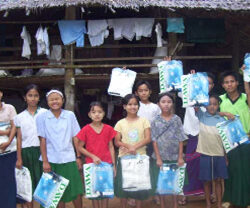
..for mosquito nets to make a difference in the war against Malaria they need to be affordable, have long lasting treatment and allow ventilation…
.
What are LLIN Nets?
Recently the WHO listed a new class of net, LLIN (Long Lasting Insecticidal Net). The World Health Organization define an LLIN as a factory treated mosquito net that is expected to retain full insecticidal afficacy after at least 20 washes and for at least 3 years in the field under recommended conditions of use. Only a few nets have managed to meet the WHO requirements for registration as an LLIN.
Ventilation is a serious problem for people using mosquito nets. Some nets have holes that are too small to allow the flow of air inside the net. This is particularly difficult for people living in warmer climates and usually means that occupant of the net will slightly raise the net in order to allow airflow or extend their limbs outside of the net in order to get cool. The raised net and exposed limbs give infected mosqitoes the opportunity to feed and spread Malaria, Dengue and other mosquito borne diseases.
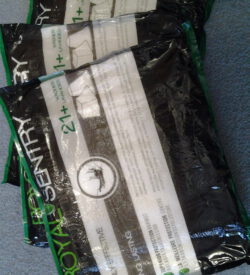
At any time Buzz Off distributes several brands of nets. The Dawa net made by Tana Netting, the Permanet 2 made by Vestergaard – Frandsen, the Net Protect net made by Bestnet, the Olyset net made by Sumitomo Chemicals. and Royal Sentry made by Disease Control Technologies.